
Our Value Creation Strategy
Sustainability has always been an integral part of QL’s business operations. In our efforts to create shared value for all, we are cognizant of our role, responsibility and duty to conduct business ethically and uphold good corporate governance, operate in a socially and environmentally responsible manner and adhere to sustainable practices.
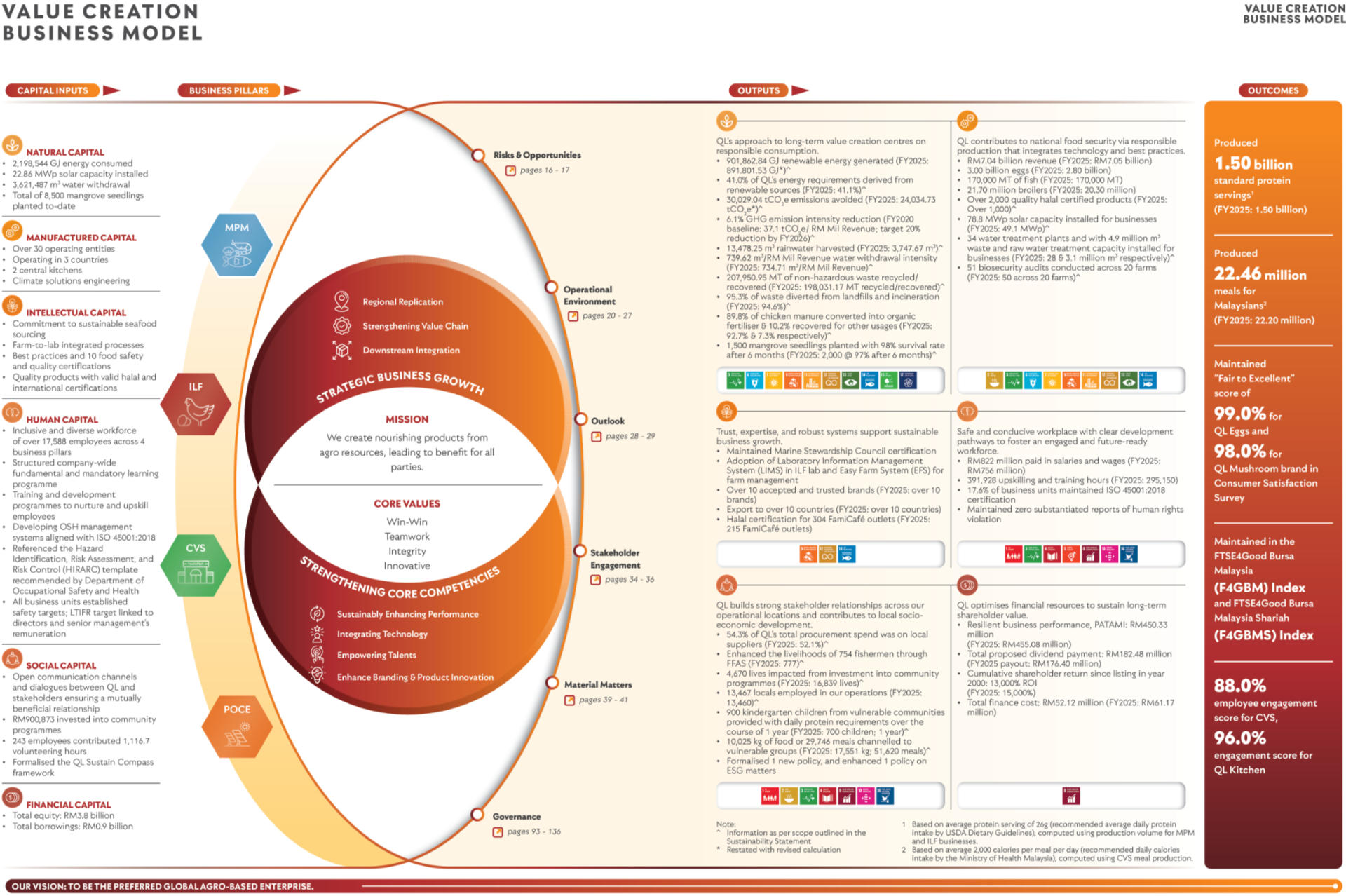
Our Value Creation Model
Sustainability Governance
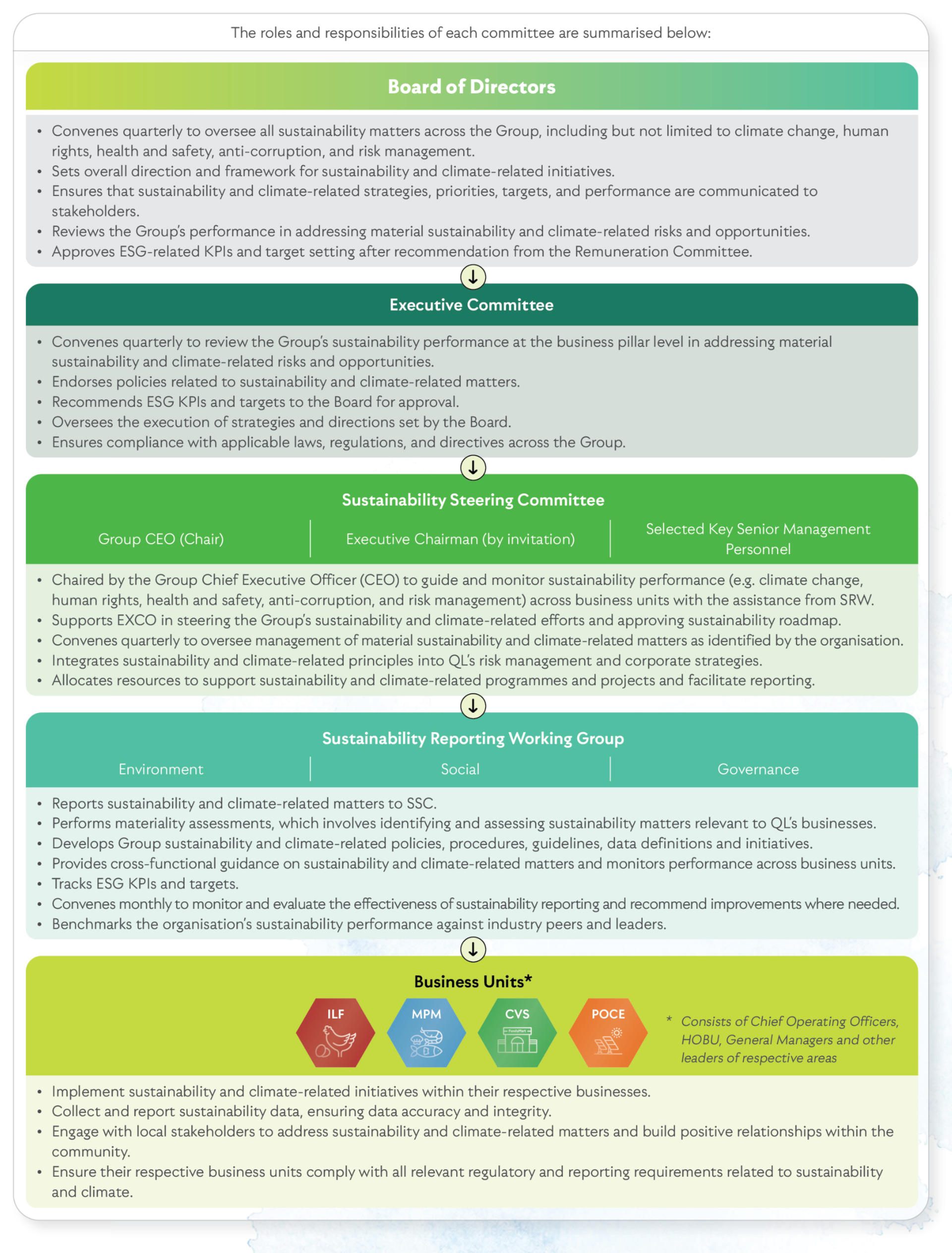
Sustainability governance at QL is anchored by the Board of Directors (“the Board”), which holds ultimate accountability for overseeing the Group’s sustainability and climate-related risks and opportunities. Supported by the Executive Committee (EXCO), the Board reviews and guides QL’s material sustainability strategies, priorities, targets and performance, ensuring that sustainability considerations are integrated into strategic decision-making. The Board also provides oversight of related risks and opportunities and ensures that relevant sustainability information is effectively communicated to internal and external stakeholders.
The Board is supported by the Sustainability Steering Committee (SSC), chaired by the Group Chief Executive Officer (CEO) and comprising Heads of Business Units and Business Functions (HOBU). The SSC is further assisted by the Sustainability Reporting Working Group (SRW), which guides, monitors and consolidates sustainability and climate-related performance across business units. Business units are accountable for implementing sustainability and climate-related initiatives within their respective operations, in alignment with the Group’s overarching policies, frameworks and strategic priorities.
To ensure the Board has the necessary expertise, the Nominating Committee conducts an annual evaluation of its own performance, the Committees, and individual Directors to ensure effective governance, including oversight of sustainability and climate-related matters. As of March 2026, all Directors have completed and attended relevant training to support their roles.
In order to enable realistic implementation of commitment on sustainability and climate change matters, the ESG key performance indicator (KPI) targets, specifically greenhouse gas (GHG) emissions targets and Lost Time Injury Frequency Rate (LTIFR) reduction targets, are linked to executive directors’ and senior management remuneration.
Materiality Assessment
In FY2024, QL conducted a comprehensive double materiality assessment, which identified 15 Material Matters that are critical to the Group’s long-term sustainability and value creation, as outlined below:
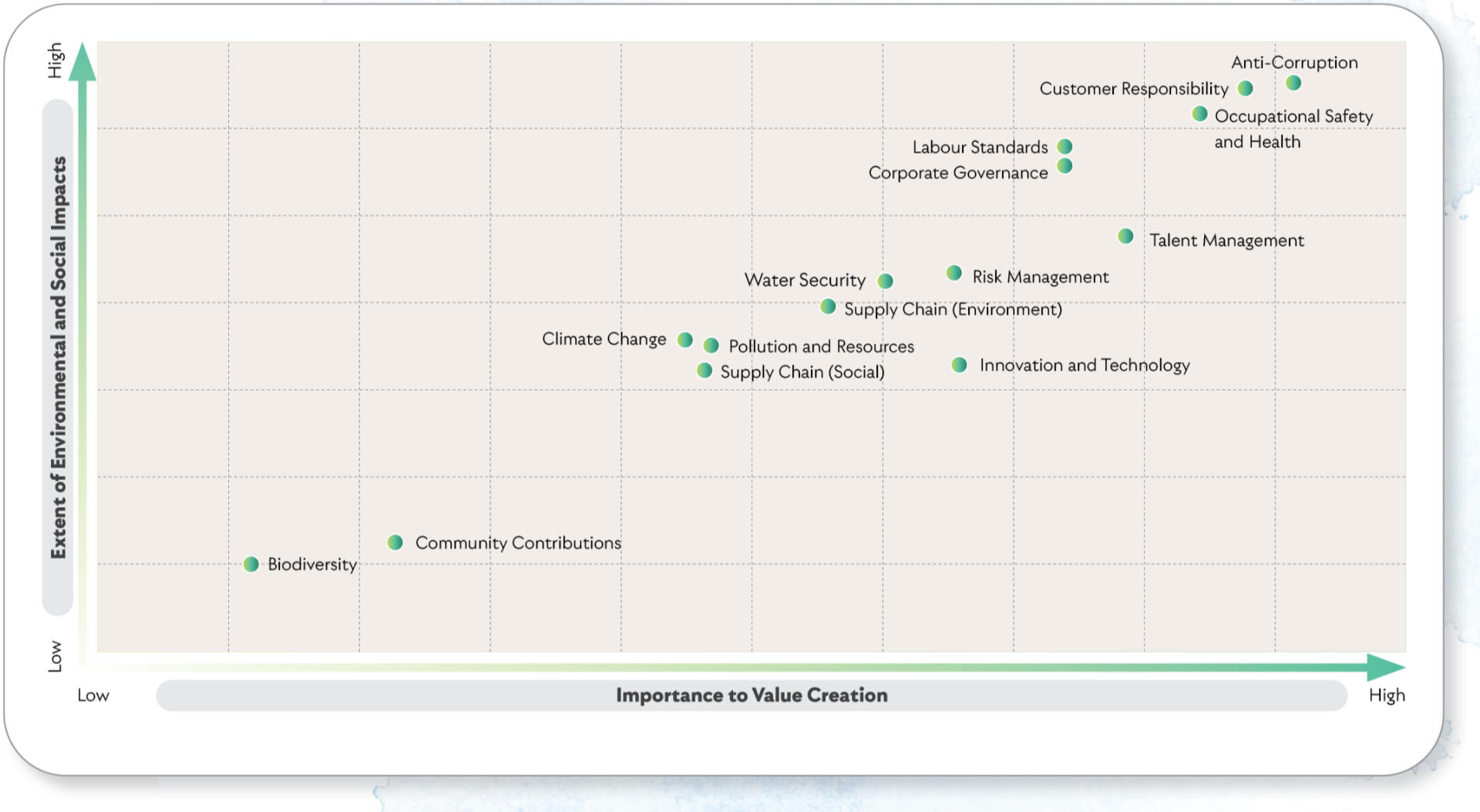
These matters reflect both QL’s most significant impacts on the economy, environment and society, as well as ESG factors that may influence stakeholder decision-making and the Group’s financial performance.
The Materiality Assessment adopted the following phased approaches:
- Identification of Material Matters
- Practical Consideration of Materiality Perspectives: Impact Materiality and Financial Materiality
- Stakeholder Engagement and Survey
- Analysis and Creation of Materiality Matrix
- Validation and Endorsement
While a full materiality assessment is undertaken once every three years, QL performs an annual interim review to ensure continued alignment with evolving internal priorities and external developments. In FY2026, a high-level review of the Material Matters and materiality matrix was conducted, supported by desktop research on emerging trends, regulatory developments and stakeholder expectations. This process enabled QL to monitor shifts in stakeholder concerns and validate the continued relevance of its sustainability focus areas. Consistent with prior years, the review affirmed that the identified material matters remain relevant.
Explore More